Why Harley Street Leads the Way in Hair Transplant Excellence
Harley Street has long been synonymous with world-class private medicine, and its reputation in hair restoration stems from rigorous standards and surgeon-led care. Clinics here are typically inspected by the Care Quality Commission, and top teams combine meticulous planning with advanced microsurgical techniques to achieve results that look undetectably natural. The best outcomes come from an approach that prioritizes donor preservation, artistry, and lifetime planning—not just immediate density. When executed by experienced surgeons, a hair transplant can frame the face, restore confidence, and remain stable for decades.
Modern Harley Street practices leverage high-magnification microscopy to sort grafts, ultra-fine punches for FUE (often 0.8–0.95 mm), and precise implantation tools that respect hair angulation and curl pattern. Grafts are handled gently and kept hydrated in chilled solutions to protect follicular integrity, boosting survival rates. Properly designed hairlines employ single-hair grafts at the front and multi-hair grafts behind to create the illusion of density while maintaining softness. This attention to detail is why many consider the area a benchmark for the best hair transplant London can offer.
Equally important is a thorough consultation. A high-caliber clinic conducts trichoscopy to map miniaturization, assesses donor density and caliber, and evaluates future hair-loss risk. The goal is to balance today’s cosmetic goals with tomorrow’s stability. For Afro-textured hair, for example, curved follicular paths demand specific punch selection and angles to reduce transection. For patients with diffuse thinning, medication-led stabilization may precede surgery. Every plan is individualized because the long-term value of a hair transplant Harley Street experience lies not only in immediate cosmetic change but also in smart stewardship of a finite donor supply.
Methods, Candidacy, and Results: What to Expect from a Modern Hair Transplant
The two gold-standard surgical methods are FUE (Follicular Unit Excision) and FUT (Follicular Unit Transplantation). FUE removes individual follicular units from the donor region using micro-punches, leaving tiny dot scars that are typically hard to detect at short hair lengths. FUT, by contrast, removes a narrow strip that is dissected under microscopes, which can yield a high number of grafts efficiently; it does leave a linear scar, usually well concealed with surrounding hair. Direct hair implantation (DHI) is essentially a variation of FUE with implanter pens. Your choice depends on hairstyle preferences, donor characteristics, and restoration goals. A reputable team will explain trade-offs clearly—FUE suits shorter styles and incremental sessions, while FUT can be ideal for larger single sessions when donor supply is robust.
Sound candidacy hinges on a full assessment of hair-loss pattern, donor capacity, and stability. Male pattern loss (often staged with the Norwood scale) progresses over time; a patient in his early 20s might benefit from medical therapy and a conservative hairline that anticipates future loss. Lifetime donor capacity often ranges from 5,000 to 7,000 grafts, though this varies by density, hair caliber, and scalp laxity. Medical optimization with finasteride or dutasteride (as clinically appropriate), topical/oral minoxidil, and adjuncts such as PRP can improve or maintain native hair, safeguarding the investment. Within the broader hair transplant UK landscape, the most reliable clinics integrate medication and surgery to slow progression and maximize long-term coverage.
On the day of surgery, local anesthesia and optional mild sedation keep the procedure comfortable. The donor area is prepared, grafts are extracted or the strip is harvested, and recipient sites are made to match direction, angle, and curl. Aftercare includes saline misting, gentle cleansing, sleeping slightly elevated, and avoiding strenuous activity for approximately two weeks. Scabs usually shed by day 10. Transplanted hair sheds in the “telogen effluvium” phase around weeks 2–6, then begins regrowth around month three, with most cosmetic change between months 6 and 12. Expect 90–95% survival in expert hands. A natural outcome avoids “pluggy” looks by using single-hair grafts at the leading edge and placing density strategically where it delivers the most visual impact, especially in the frontal third and mid-scalp.
Costs, Case Studies, and How to Identify the Best Hair Transplant London Providers
Pricing in London varies by method, graft count, and surgeon experience. Typical ranges are often quoted per graft, with FUE commonly higher than FUT due to time and labor intensity. Packages may include pre-operative bloods, post-op kits, and follow-up appointments. What truly matters is value: surgeon involvement, a skilled, consistent technician team, rigorous graft handling, and transparent expectations. Beware of aggressive sales tactics, “guaranteed” densities that defy donor math, or mega-sessions that risk overharvesting. A trustworthy clinic explains how many grafts are needed now, how many should be saved for future loss, and how to maintain native hair over time. For those surveying options, the hair transplant london market features surgeon-led centers that prioritize long-term planning as much as today’s cosmetic goals.
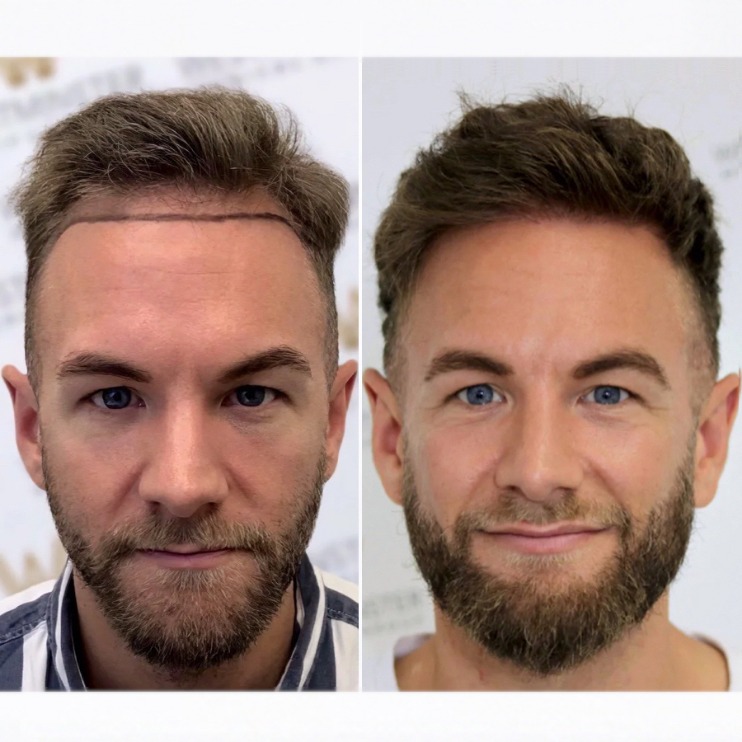
Real-world examples highlight smart strategy. A 28-year-old with Norwood 3 recession might undergo a 2,200-graft FUE to rebuild a mature hairline, preserving temple recessions and avoiding an overly low design that could look unnatural at 40. Singles are meticulously placed along the hairline with feathered irregularity, while multis reinforce density behind. With consistent finasteride use and periodic assessments, the patient preserves a strong frontal frame and keeps donor reserves for potential crown work years later. Twelve months after surgery, the result reads as “born with it” thanks to careful angle and direction matching, not just graft count.
A 42-year-old with Norwood 4 thinning could benefit from a combined approach: a 2,500-graft FUT provides bulk efficiently, followed by a targeted 800-graft FUE to refine temples and add mid-scalp coverage. This hybrid strategy maximizes yield while protecting donor aesthetics. The plan is paired with minoxidil and, when appropriate, PRP to support miniaturizing native hair. In women with female pattern hair loss or traction-related thinning, candidacy requires extra care. Diffuse thinning can make extraction risky if the donor is unstable; integration therapy, medical treatment, and meticulous, small sessions may be indicated. In all cases, surgeons should provide unedited, well-lit before-and-afters, ideally with video and wet-combed views, to show density honestly.
Identifying the best hair transplant London providers comes down to due diligence. Ensure the surgeon is present for consultation, designs the hairline personally, and articulates a multi-year plan. Look for a clinic that discusses donor math—average donor density, hairs per graft, and realistic maximum harvests—rather than promising quick fixes. Verify GMC registration and CQC oversight. Ask about anesthesia protocols, emergency readiness, and sterile procedures. Confirm that technicians are consistent, experienced staff—not temporary hires—and that the number of grafts per technician is safe to maintain quality control. Thoughtful Harley Street teams favor conservative hairlines, place single hairs at the front, respect ethnic hair characteristics, and refuse to overharvest, embodying the patient-first ethos that defines elite hair transplant care in London and across the UK.